From the archive
Let's draw a graceful swan on water
Treat this as one small practice round: build the subject lightly, notice the shapes, then darken only the lines that help the finished sketch.
-
01
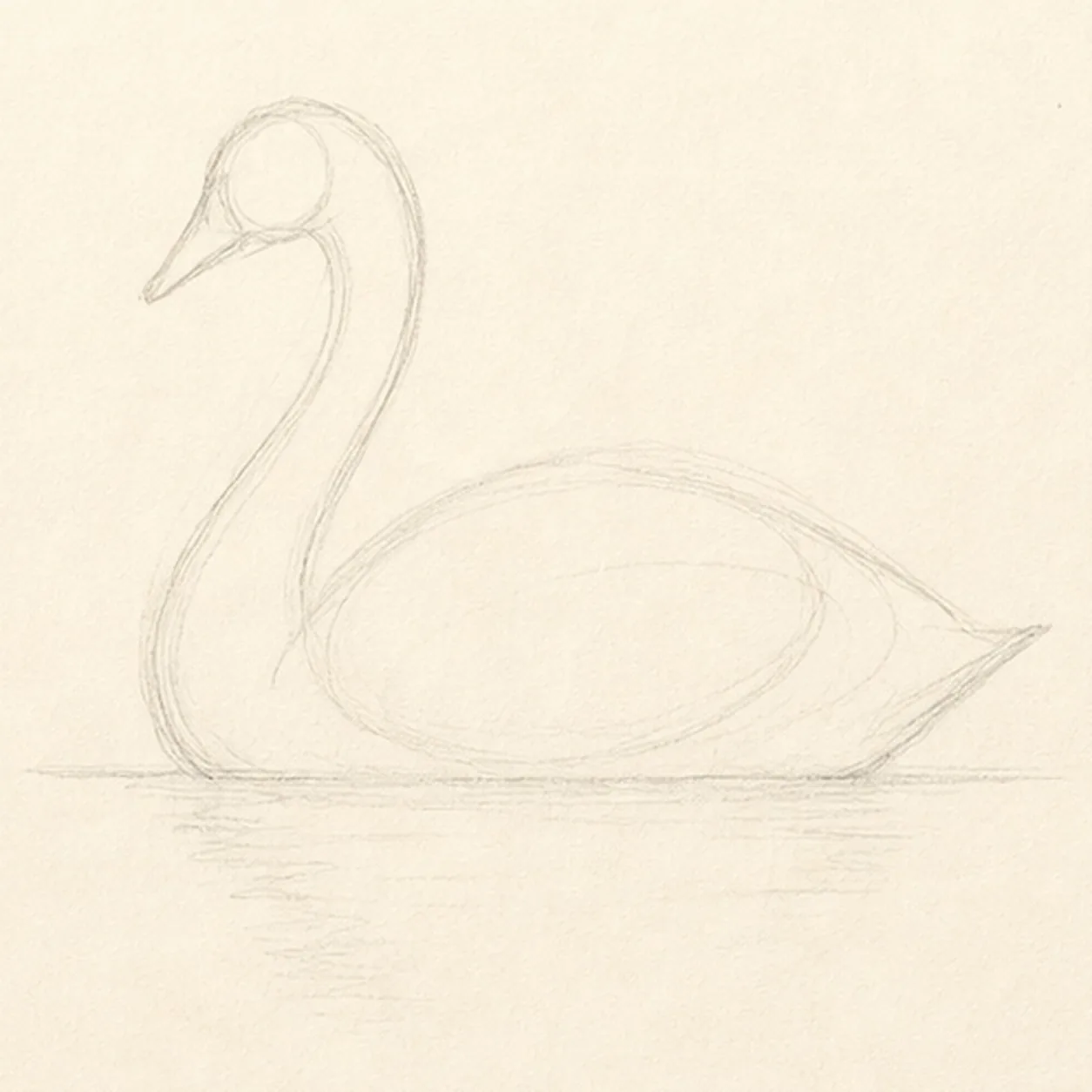
Set the swan gesture
Draw a light body oval and long S-curved neck gesture, then place the head, beak wedge, folded-wing footprint, tail point, waterline, and pale reflection zone.
Sketch tip: Ghost the neck curve two or three times before touching down. Compare the open paper inside the S with the space above the wing, and reserve the wing footprint instead of finishing body texture beneath it.
-
02
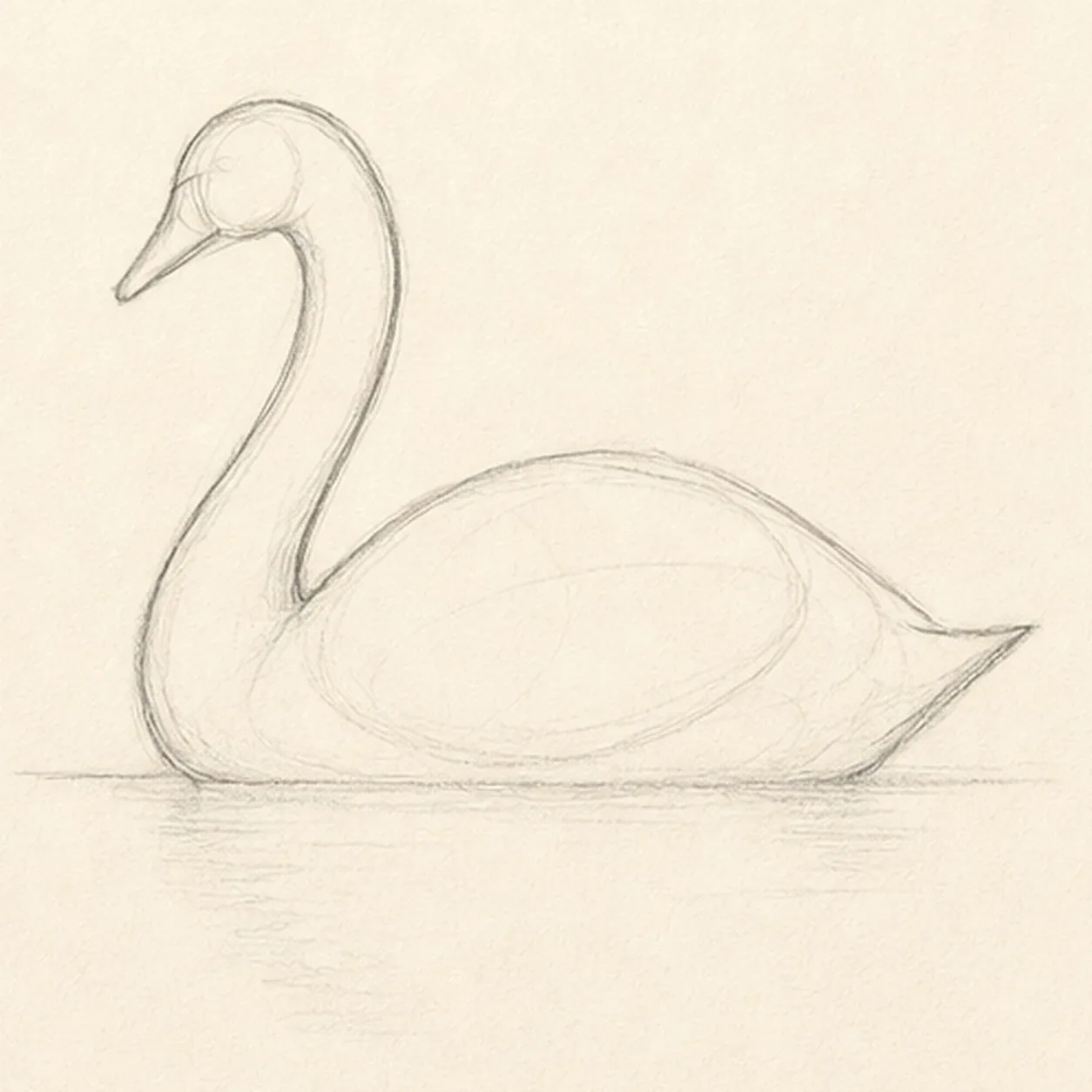
Shape the gliding swan
Wrap the guides with the long neck, rounded body, small head, tapered beak, folded wing, and pointed tail while preserving the same left-facing side view.
Sketch tip: Rotate the page so you can pull each long neck edge in one relaxed pass. Keep the two sides of the neck related without forcing them into parallel mechanical lines.
-
03
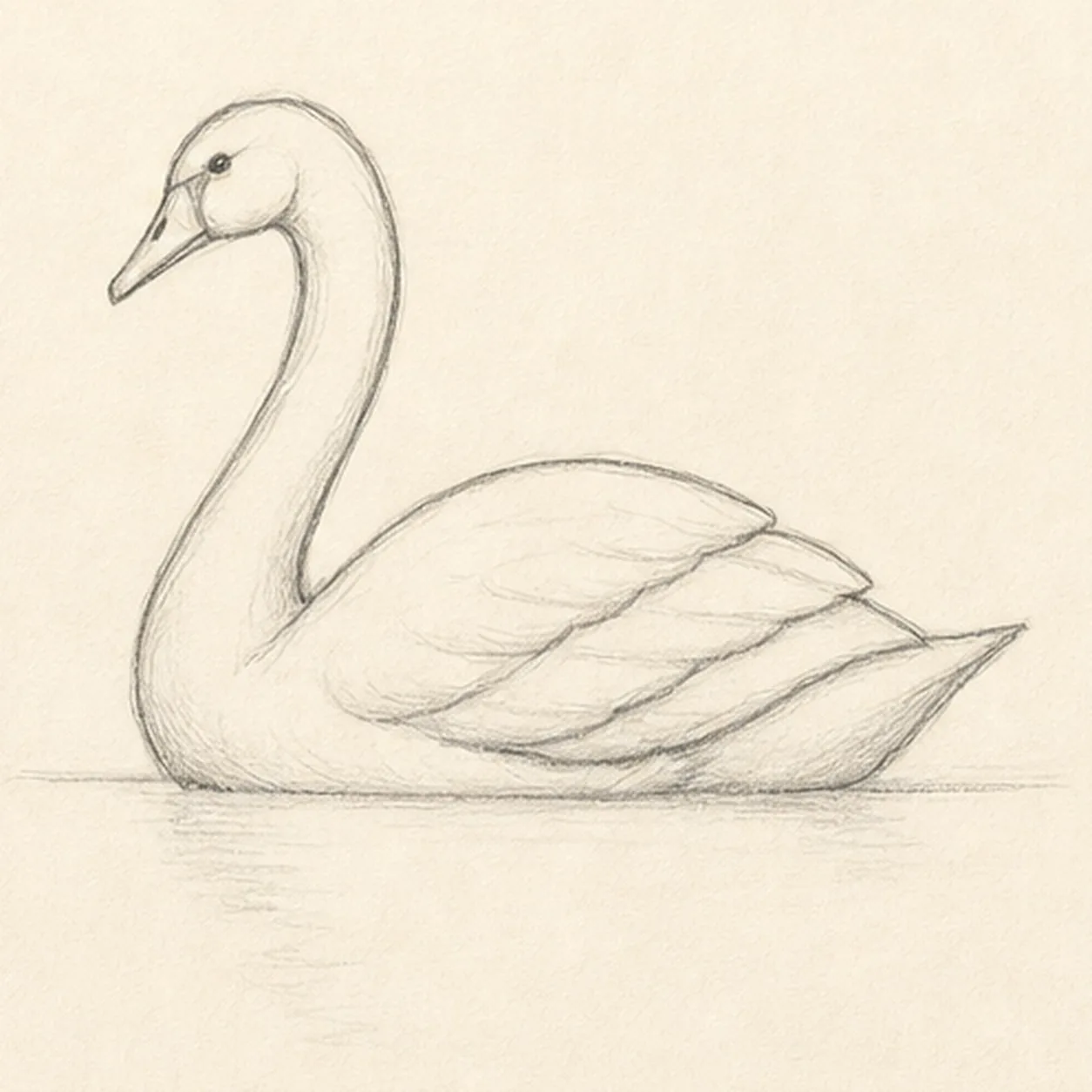
Build the face and wing
Add the small eye, beak division, cheek line, exactly three broad layered feather groups, and the soft underside feather edge inside the completed silhouette.
Sketch tip: Draw the three feather groups as overlapping leaf-like masses, not rows of individual feathers. Squint once to make sure the wing still reads as one folded form.
-
04
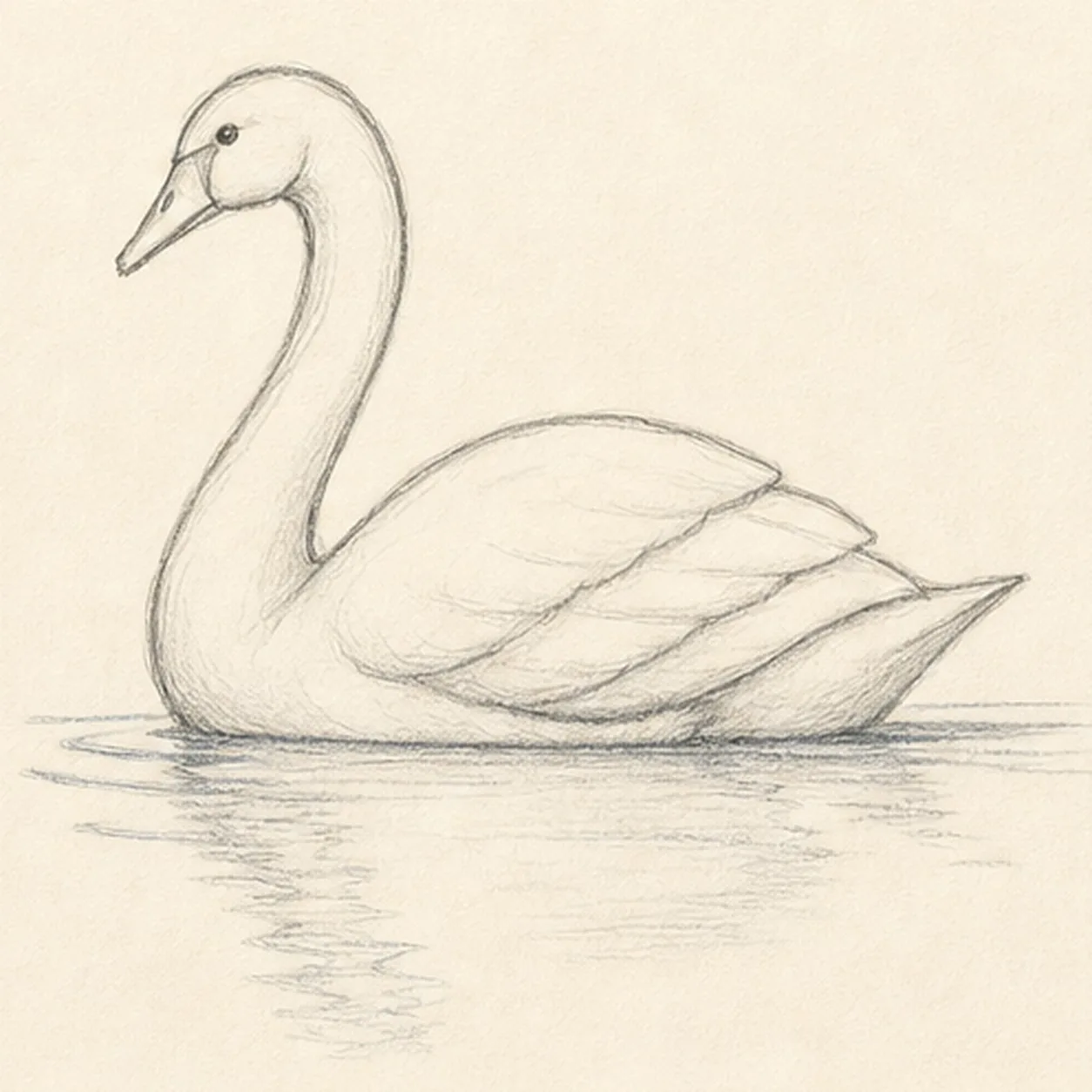
Add the calm water
Draw exactly three horizontal ripples, a narrow trailing wake, a soft broken reflection, and a shallow contact shadow beneath the established bird.
Sketch tip: Turn the page slightly and pull the ripples from the shoulder. Break the reflected marks into short horizontal strokes so they echo the swan without becoming a second solid shape.
-
05
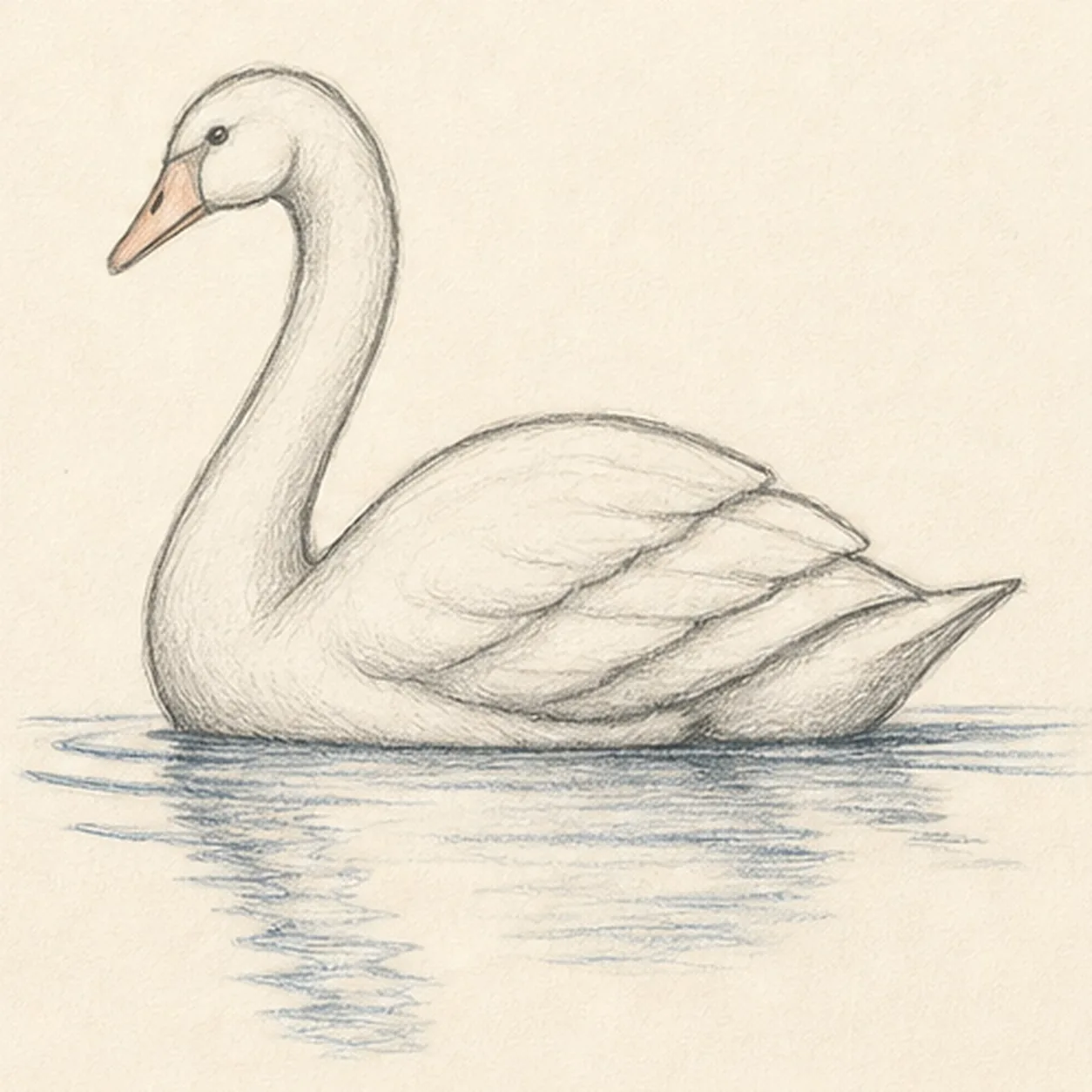
Shade the feathers and water
Layer soft graphite into the established neck, body, wing, tail, reflection, and shadow, then add broken blue-gray pencil to the water and pale peach to the beak.
Sketch tip: Use the side of the graphite lightly along the neck and feather overlaps. Leave broad paper areas white, and pull the blue-gray strokes horizontally so the water stays calm.
-
06
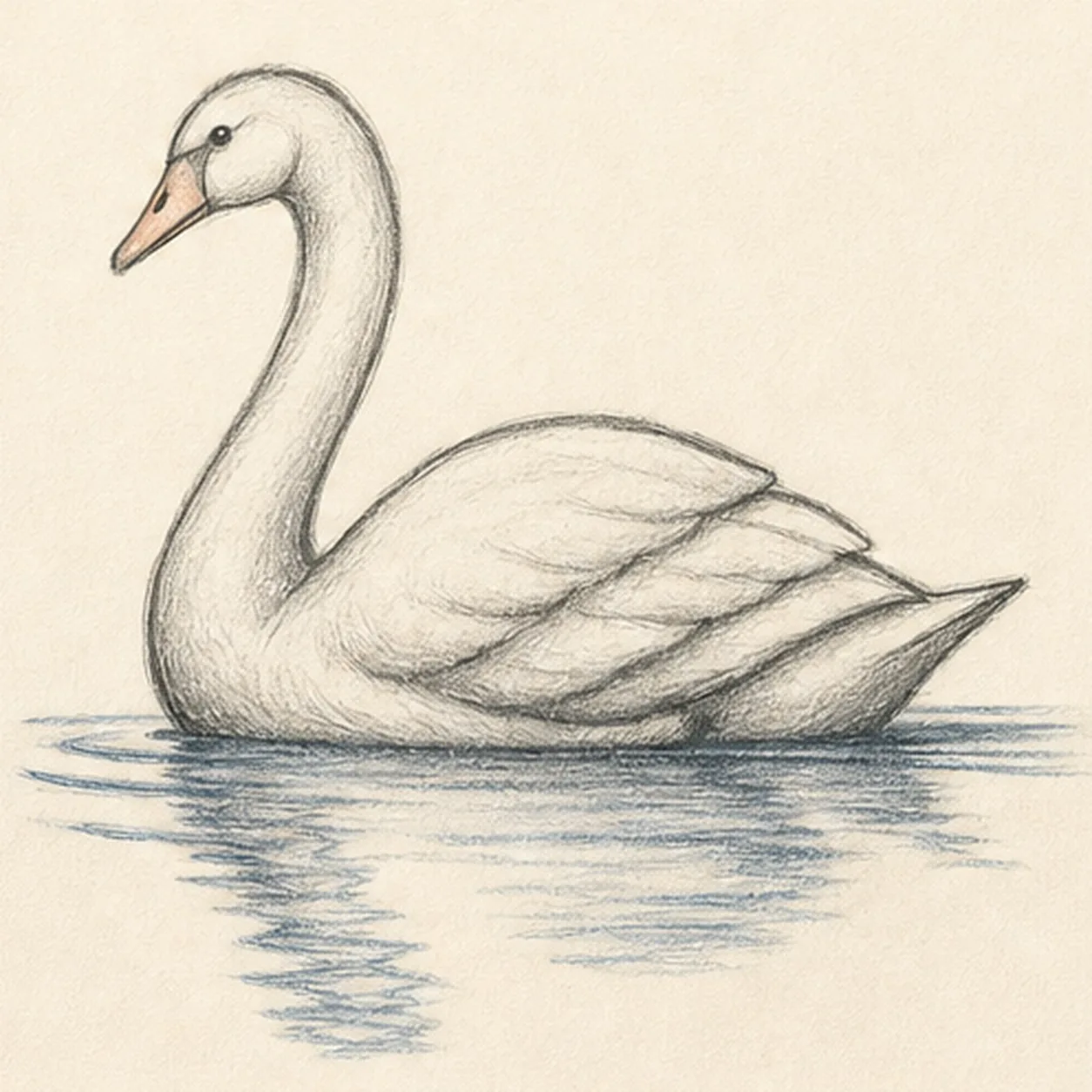
Finish the quiet glide
Strengthen the keeper contours and clarify the established face, three feather groups, three ripples, wake, reflection, restrained color, highlights, and shadow.
Sketch tip: Trace the S curve from crown to breast and count the three feather groups and three ripples, then stop. Reeds, flowers, another bird, or a full background would turn this focused gesture study into a different lesson.