From the archive
Let's draw five chain links in perspective
Treat this as one small practice round: build the subject lightly, notice the shapes, then darken only the lines that help the finished sketch.
-
01
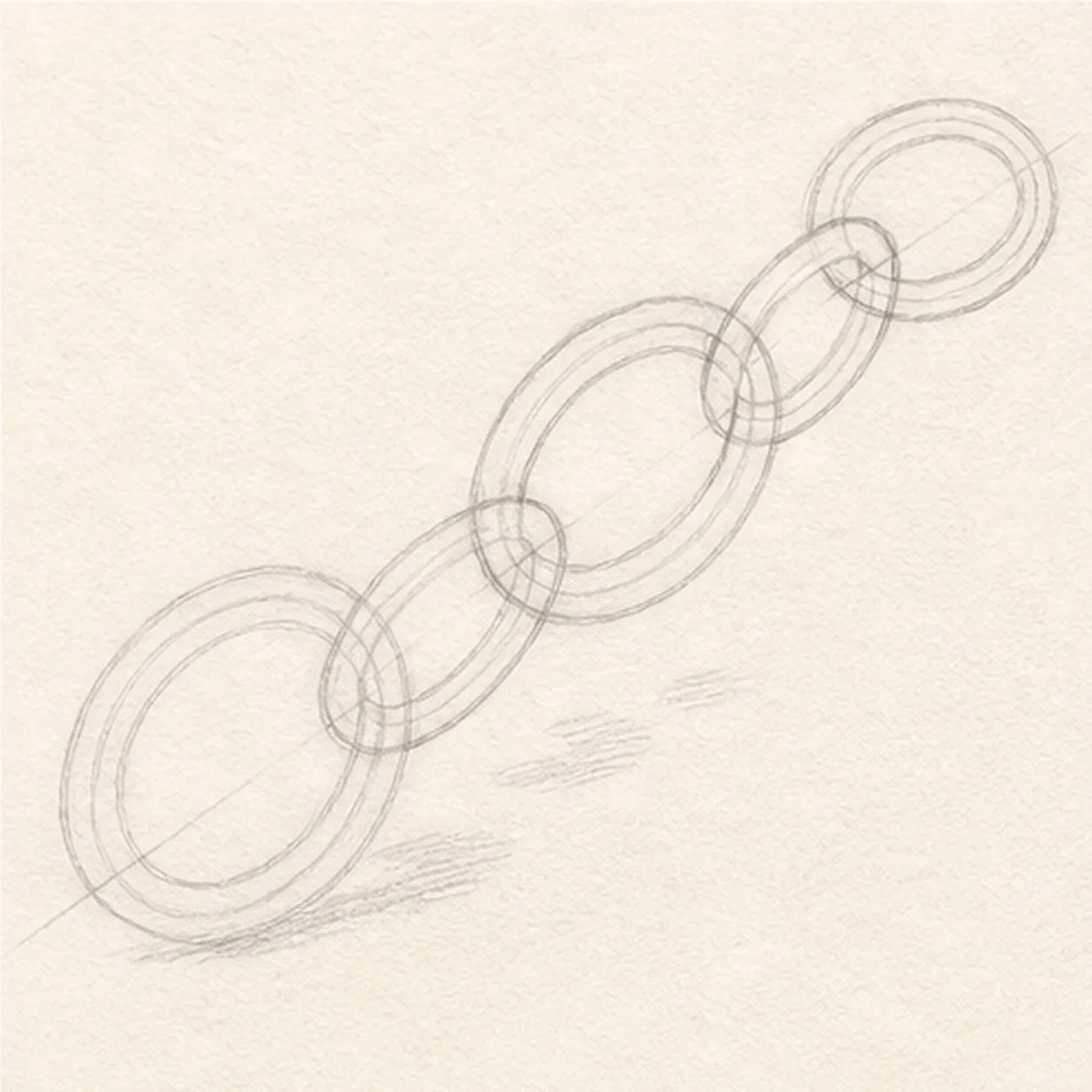
Map five link envelopes
Draw one rising diagonal, then place exactly five pale oval envelopes along it: three broader face-on links alternating with two narrow edge-on links. Add five inner openings, four overlap windows, and a broken shadow footprint.
Sketch tip: Ghost each oval before touching down and count the five openings, not just the outside shapes. Keep the two edge-on envelopes narrow enough to turn in space while leaving room for visible metal thickness.
-
02
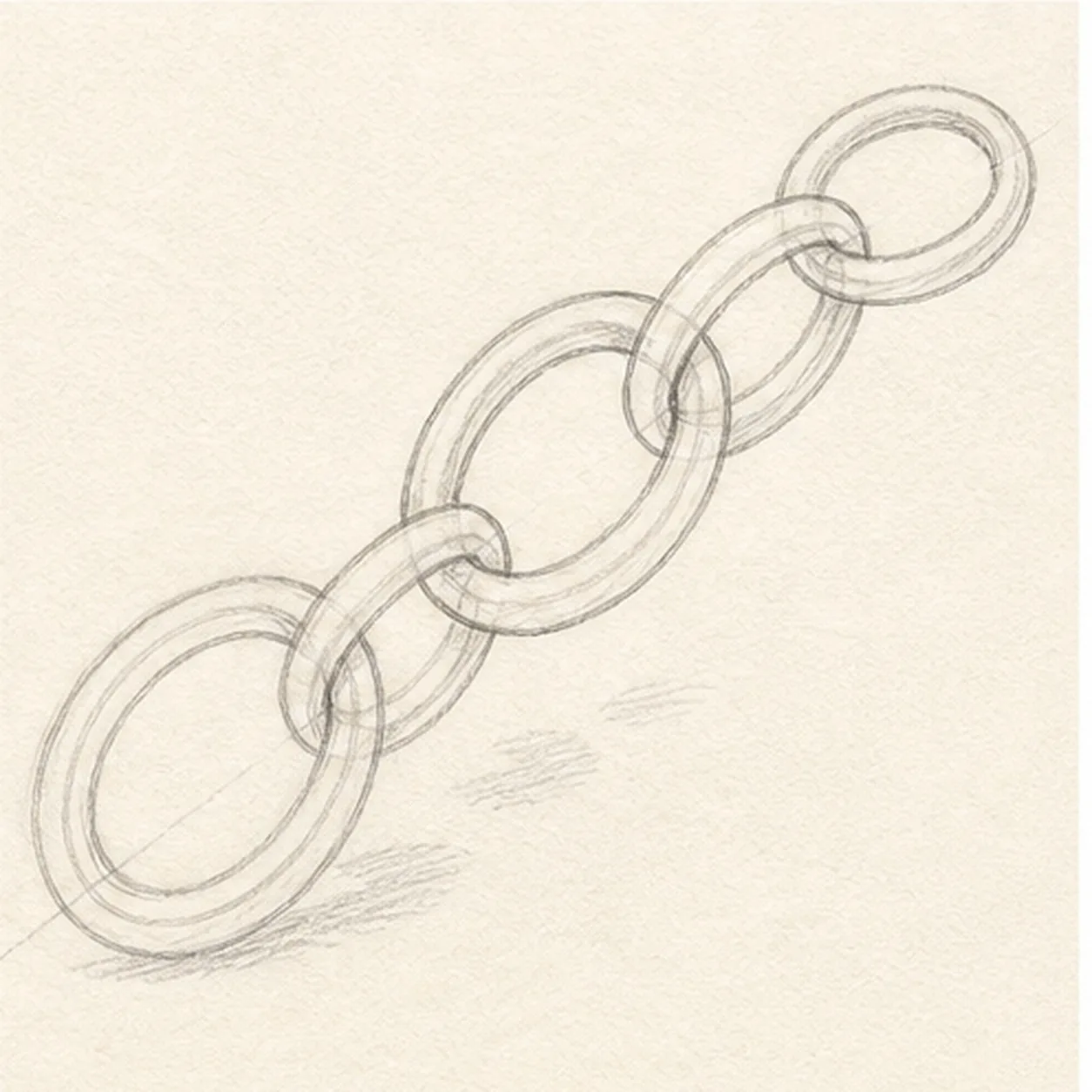
Shape the alternating links
Wrap each guide with a thick outer and inner ring, preserving all five openings and the alternating face-on, edge-on rhythm from lower left to upper right.
Sketch tip: Rotate the page for the long ellipse pulls and compare opposite sides of each ring. Small asymmetries help the chain feel hand drawn, but each inner opening should echo its outside contour.
-
03
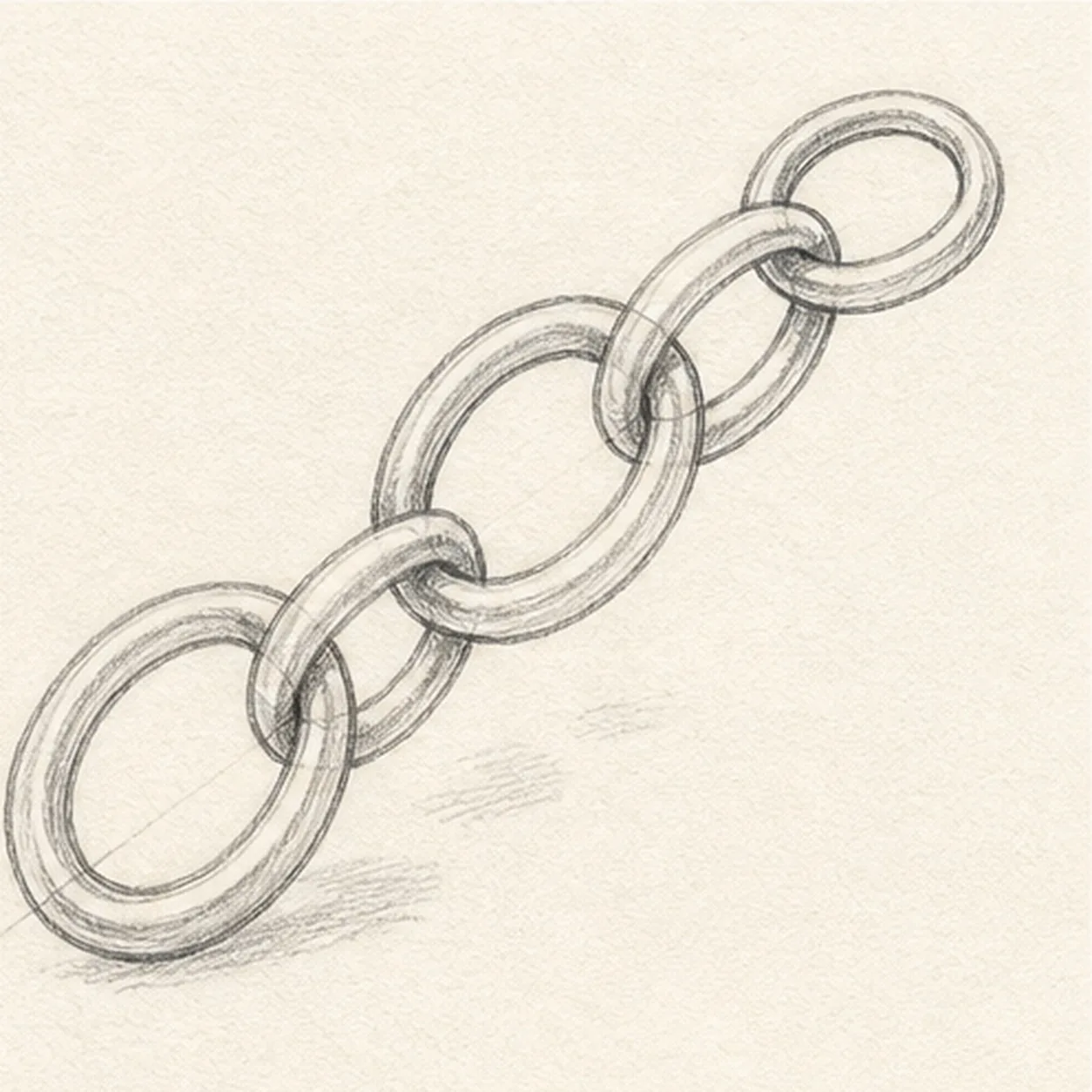
Lock the interlinks
Clarify all four over-under connections by stopping rear contours at the reserved overlap windows, then add visible inner-rim bands without changing the five-link layout.
Sketch tip: Trace the chain path with one finger from the large lower-left ring to the small upper-right ring. At every junction, one edge must pass cleanly in front while the other disappears behind.
-
04
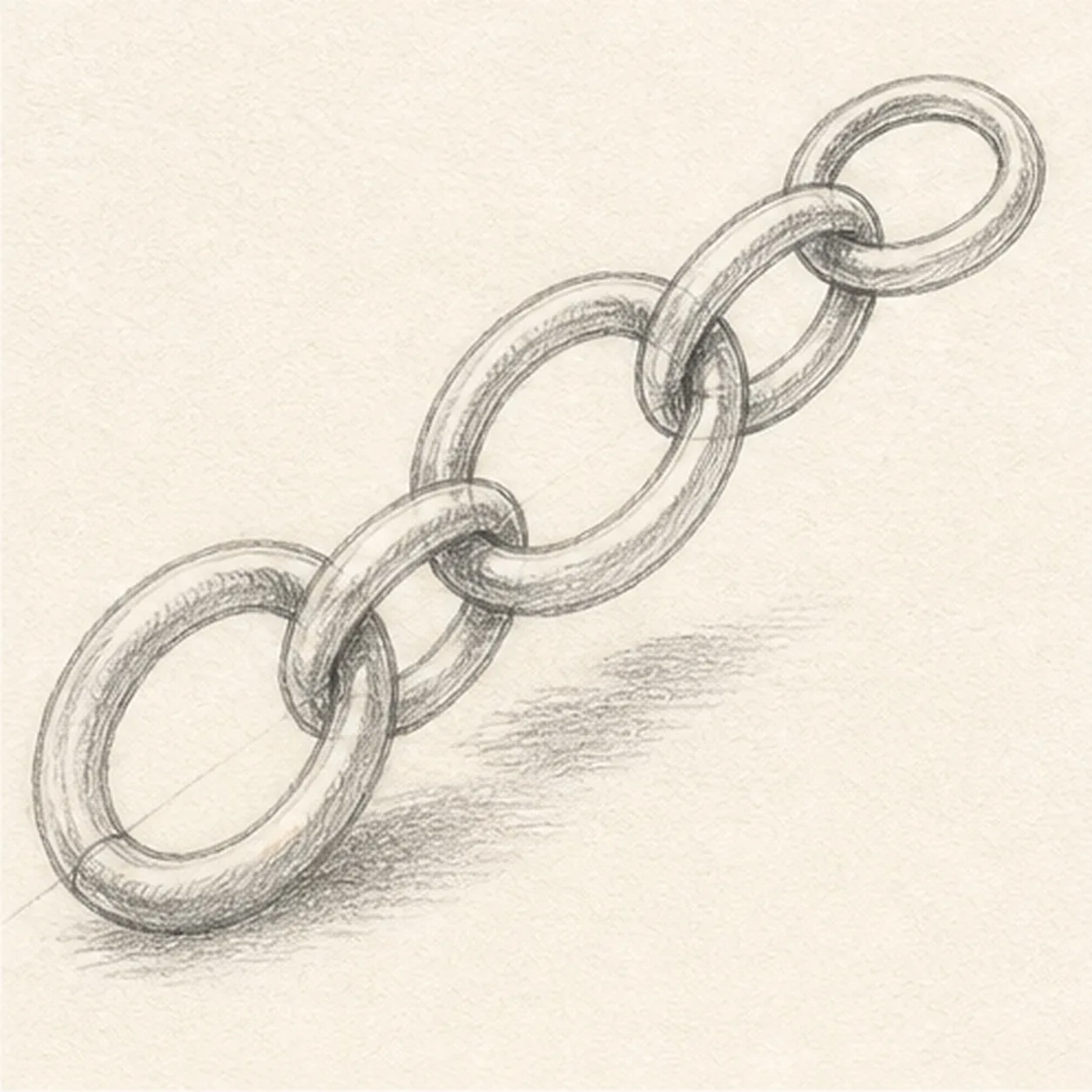
Hatch the metal weight
Add short curved graphite hatching to the established link surfaces, deepen the interior occlusion shadows, and strengthen the broken cast shadow beneath the chain.
Sketch tip: Curve each hatch around the local ring rather than shading straight across it. Keep the darkest graphite beside the four overlaps and under the lower edges so the links retain open paper highlights.
-
05
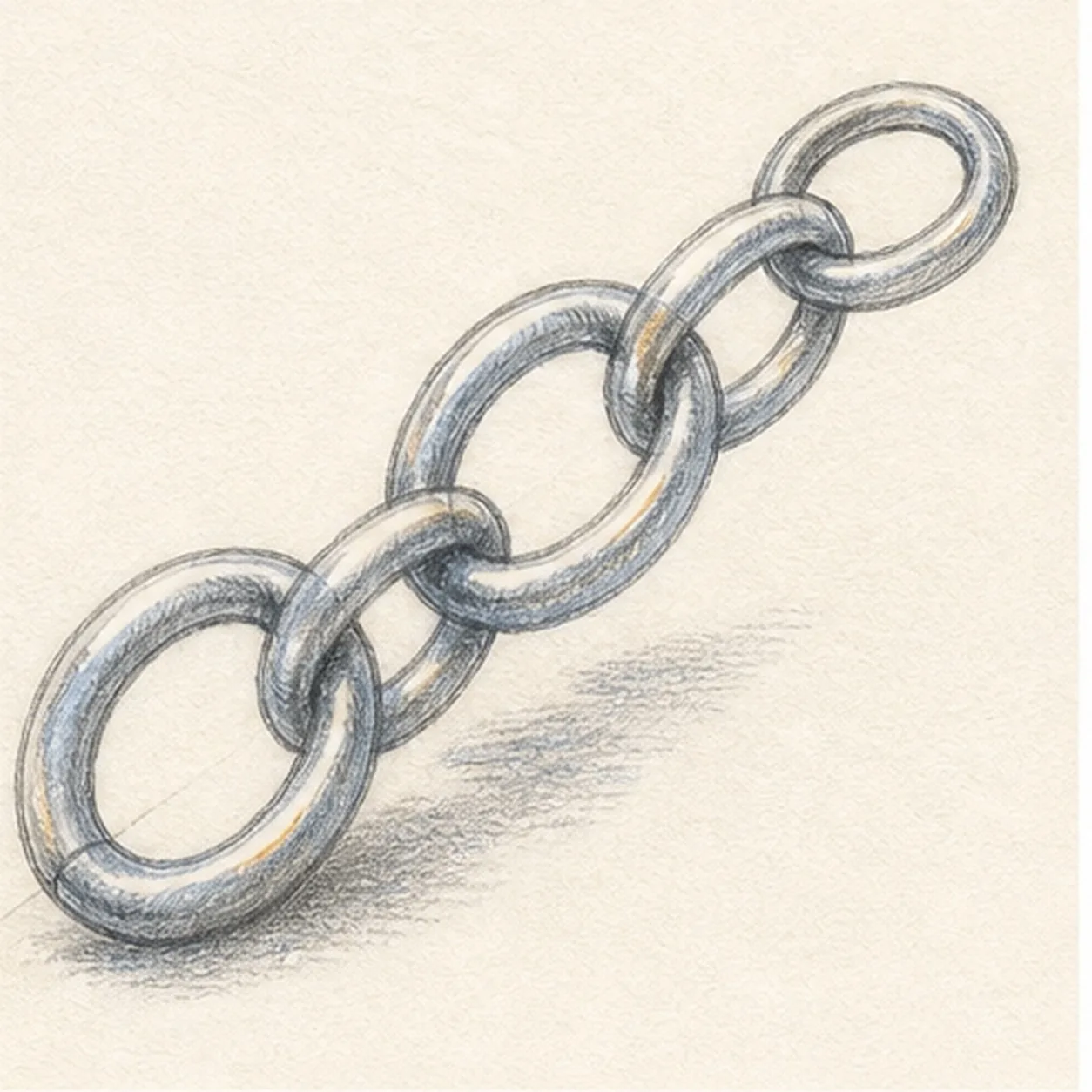
Glaze the cool metal
Layer restrained blue-gray colored pencil over the existing metal planes, add a few warm-ochre reflected accents, and preserve the brightest paper gaps along the upper edges.
Sketch tip: Pull color in the same direction as the curved graphite hatching and build two light layers. The warm accent should stay secondary to the cool gray so the chain still reads as one material.
-
06
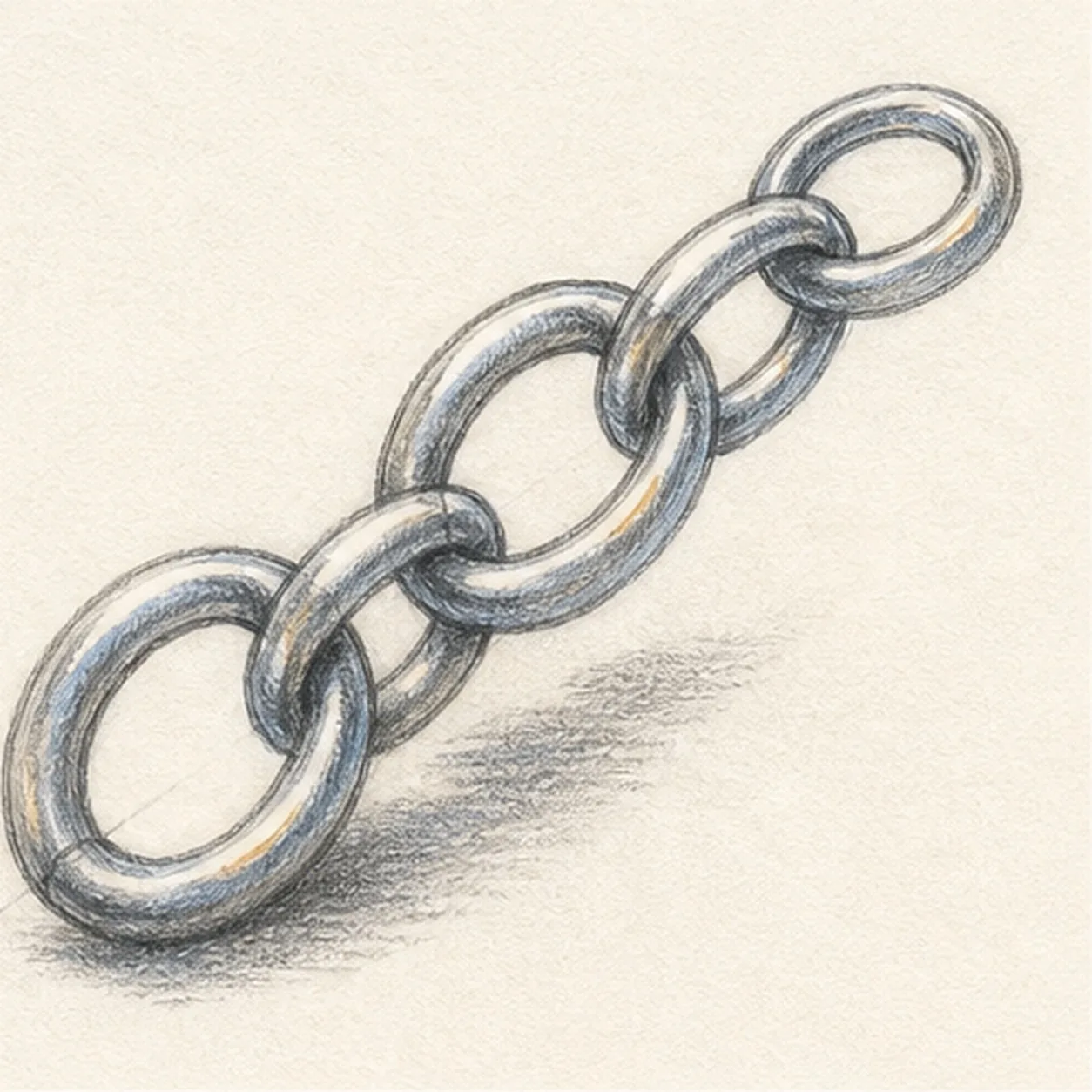
Set the chain finish
Strengthen selected keeper contours, deepen the existing graphite values and broken shadow, clarify highlights inside the established color areas, and soften only pale construction that distracts.
Sketch tip: Count exactly five links, five openings, and four interlocks before stopping. You can change the metal colors or the chain's tilt, but keep the alternating turns and over-under logic easy to follow.