From the archive
Let's draw a spool of thread and needle
Treat this as one small practice round: build the subject lightly, notice the shapes, then darken only the lines that help the finished sketch.
-
01
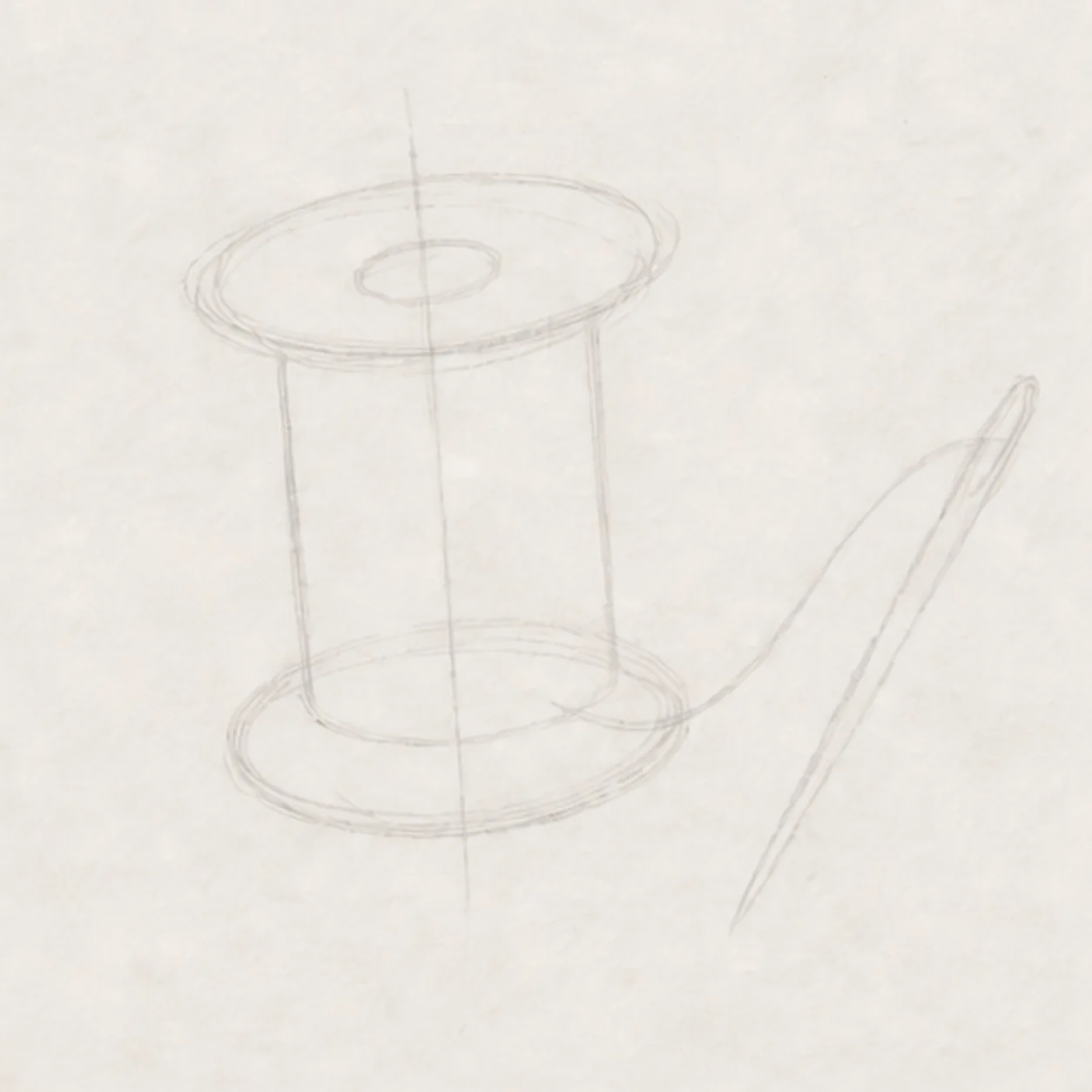
Block the spool and needle
Draw a light vertical spool axis, two wide flange ellipses, a central barrel, one diagonal needle guide, and one loose thread path connecting the two.
Sketch tip: Ghost both flange ellipses before touching down and keep their tilt related. Mark the needle-eye location early so the thread path has a clear destination.
-
02
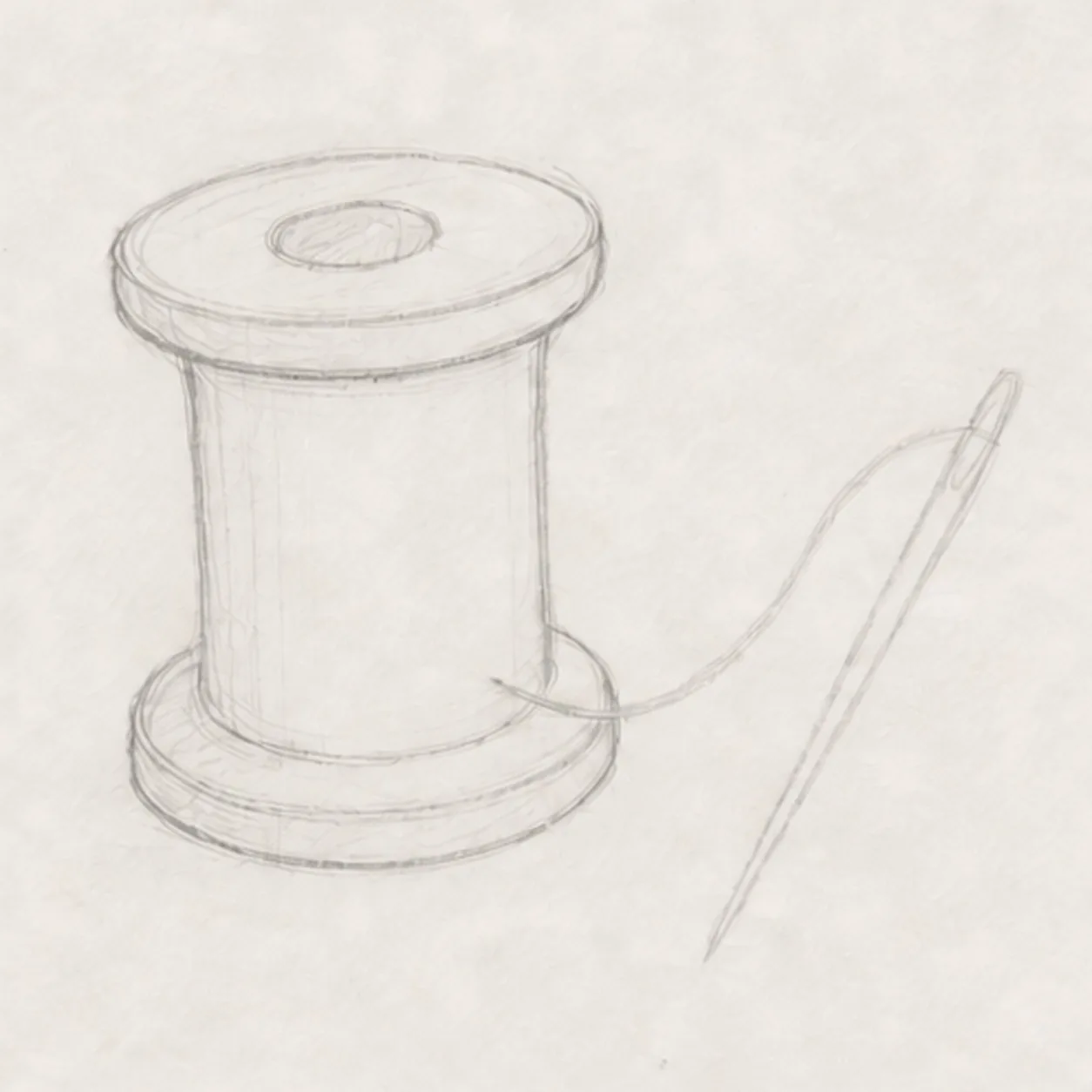
Shape the wooden spool
Wrap the ellipses into the top and bottom wooden flanges and central barrel without changing the shallow three-quarter view.
Sketch tip: Compare the visible thickness of both flanges and keep their center holes aligned to the same axis. Slight doubled lines make the ellipses feel drawn, not stamped.
-
03
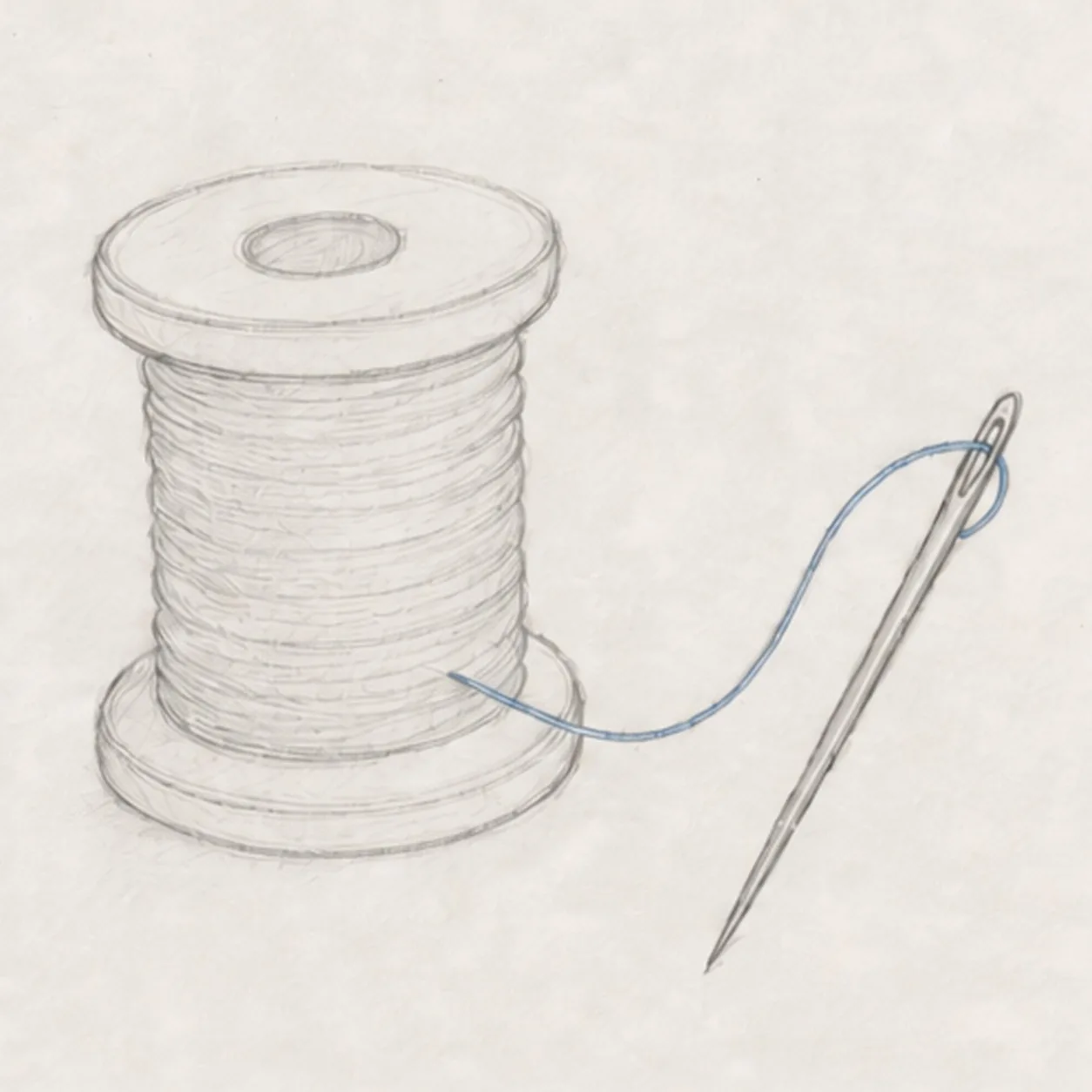
Wrap the thread and place the needle
Build the wrapped thread cylinder, draw the full sewing needle along its guide, and carry one continuous loose strand through the planned eye location.
Sketch tip: Curve the thread ridges with the spool instead of stacking flat lines. Trace the loose strand with your eyes once to make sure it never breaks or multiplies.
-
04
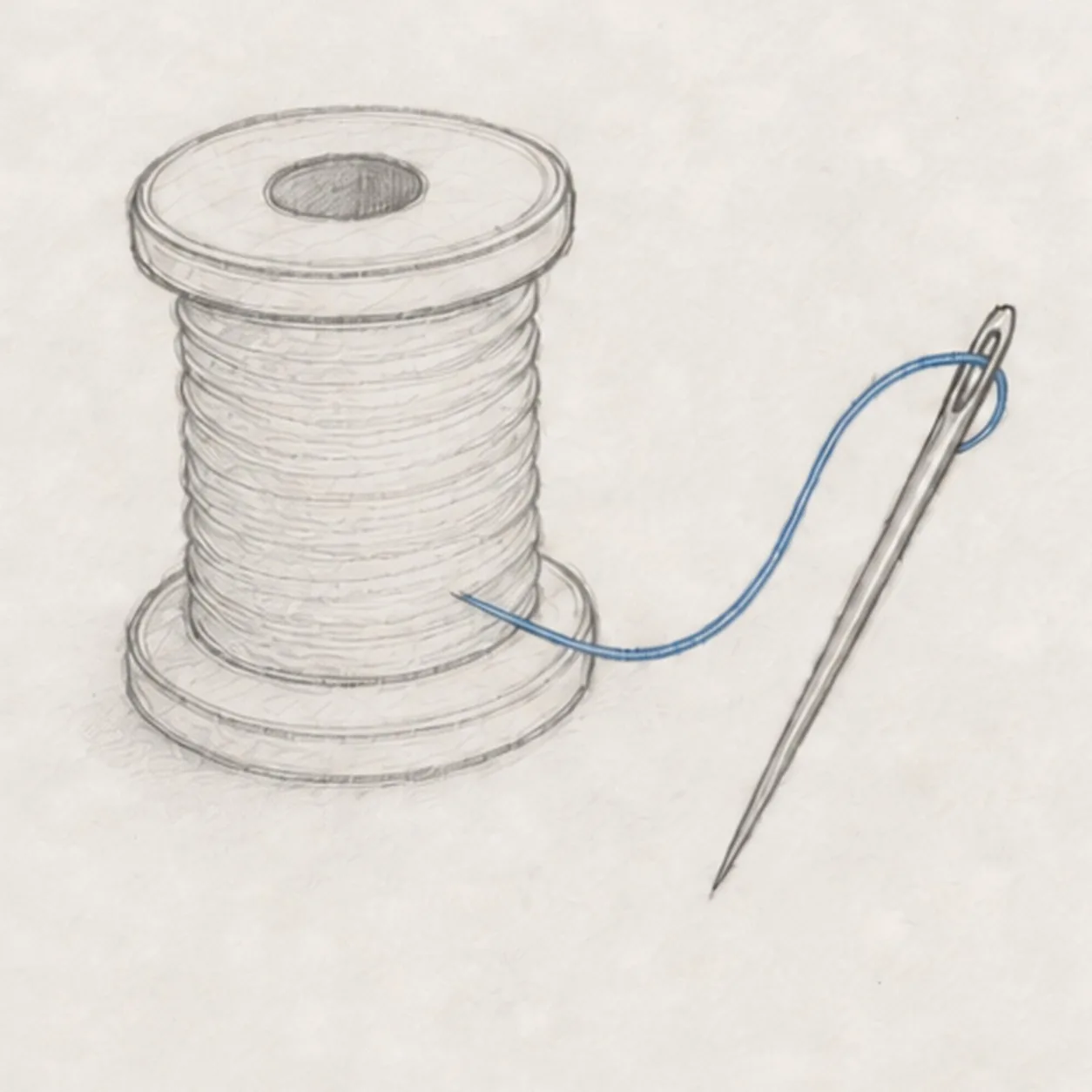
Add the sewing details
Clarify the needle eye, flange center hole, wooden edge rings, and a few stronger curved thread ridges on the established forms.
Sketch tip: Darken only a handful of thread turns and let the others stay soft. The variation suggests many wraps without asking you to draw every strand.
-
05
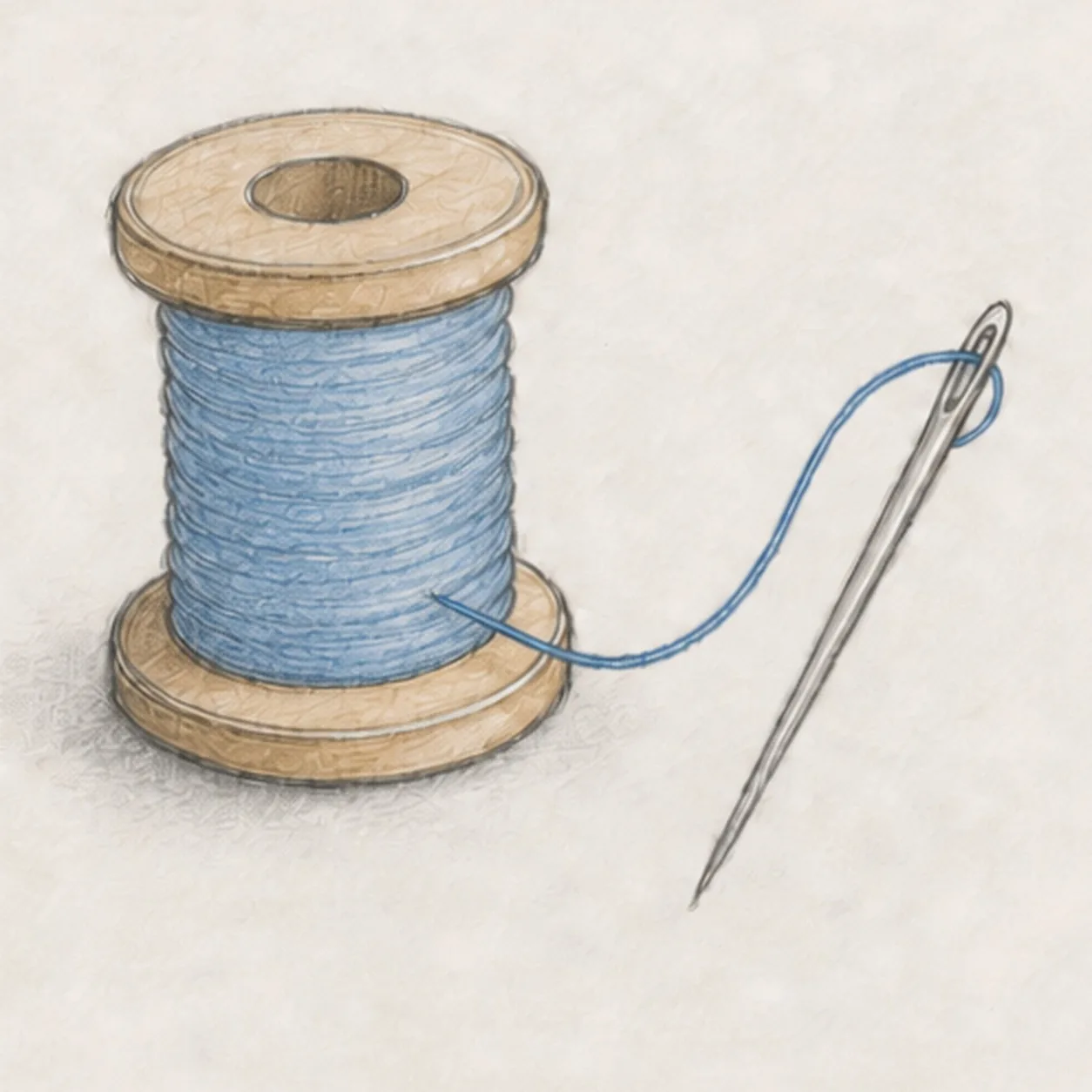
Shade the sewing colors
Add blue pencil to the thread, warm ochre to the wooden flanges, silver-gray graphite to the needle, and one soft cast shadow.
Sketch tip: Pull the blue strokes around the spool's curve and leave scattered paper gaps. Keep the thread strand and needle lighter than the dense wrapped cylinder so they remain distinct.
-
06
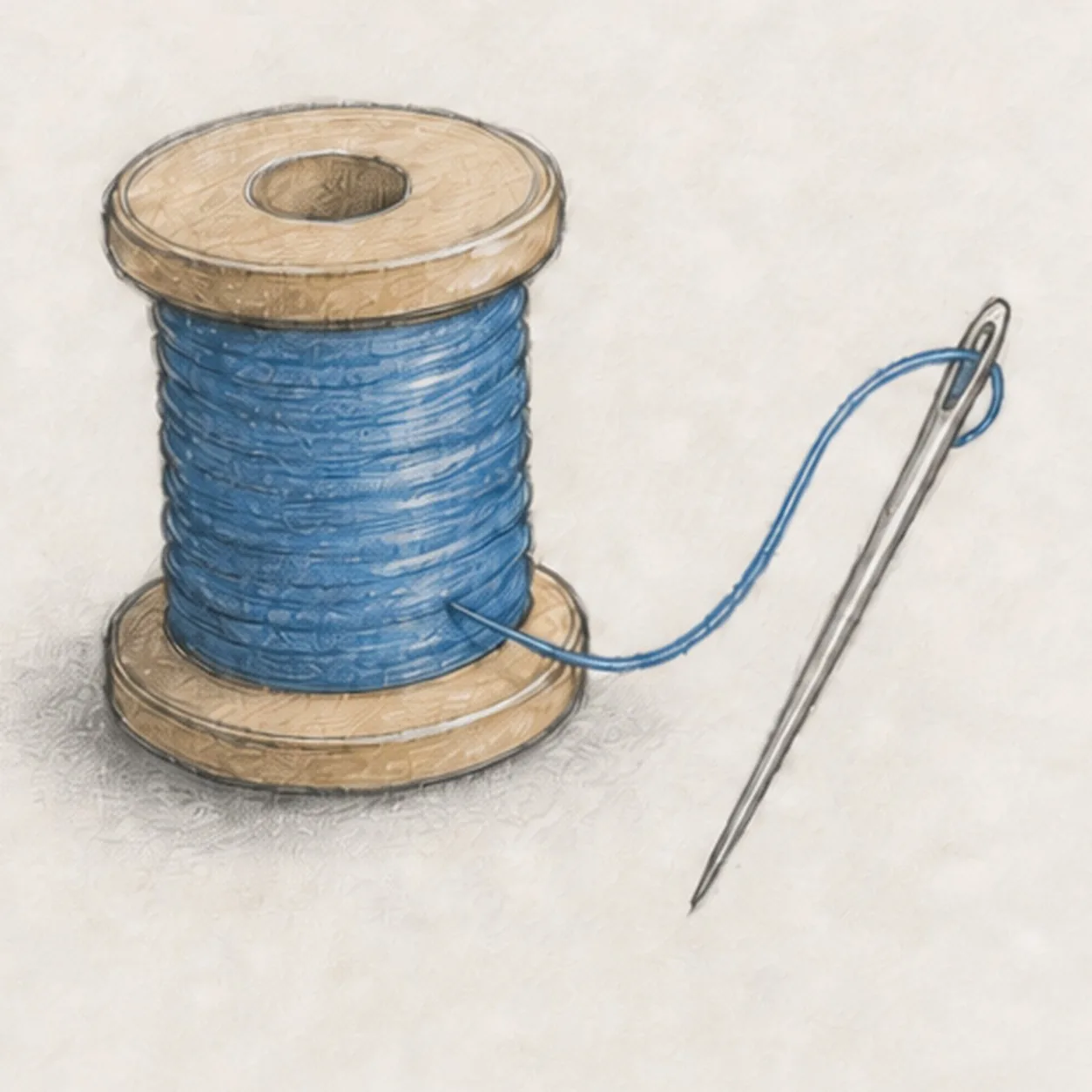
Finish the sewing sketch
Strengthen the keeper contours and clarify the established spool, thread, needle, continuous strand, material colors, texture, and shadow.
Sketch tip: Follow the blue strand from spool to needle eye one final time, then stop. Fabric, scissors, buttons, a machine, or extra notions would crowd the compact still life.